4 July 2026 · 5 min read
The ocean pools worth a winter swim
NSW's built sea baths keep the state swimming all year. From Bondi Icebergs to the heritage baths at Merewether, these are the pools that earn the winter trip.
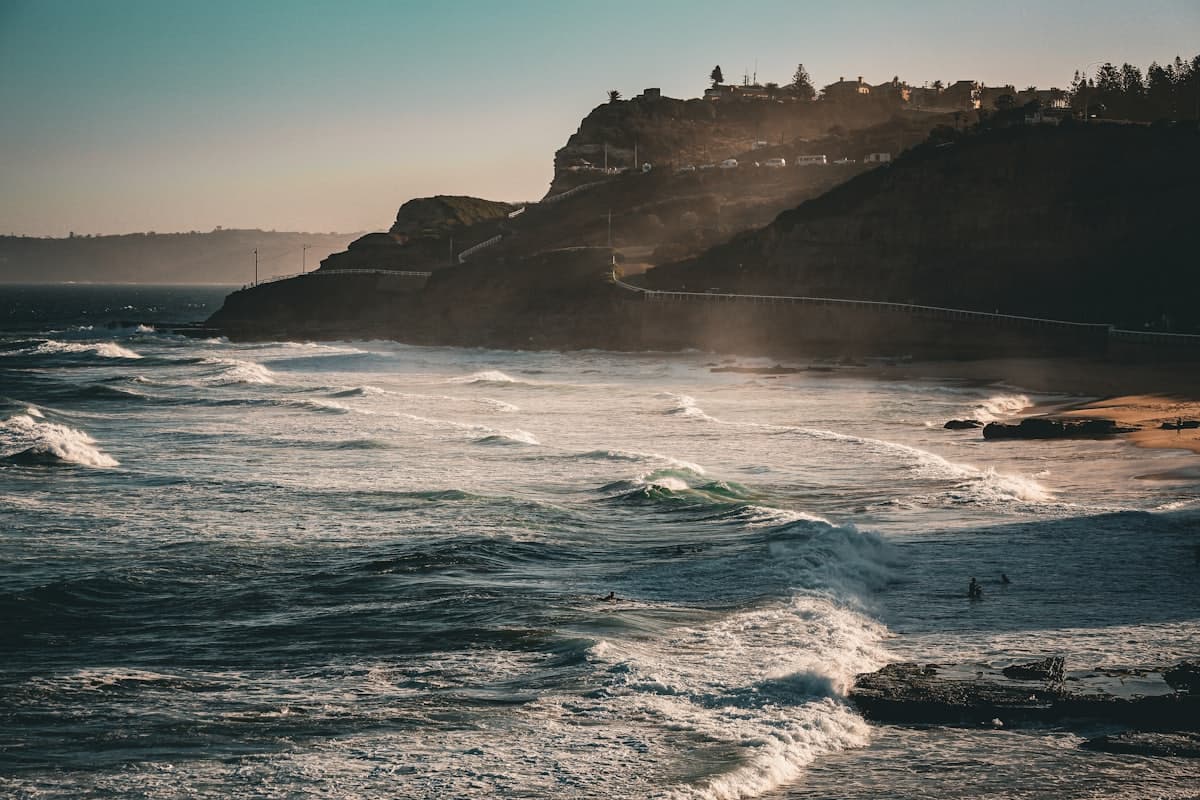
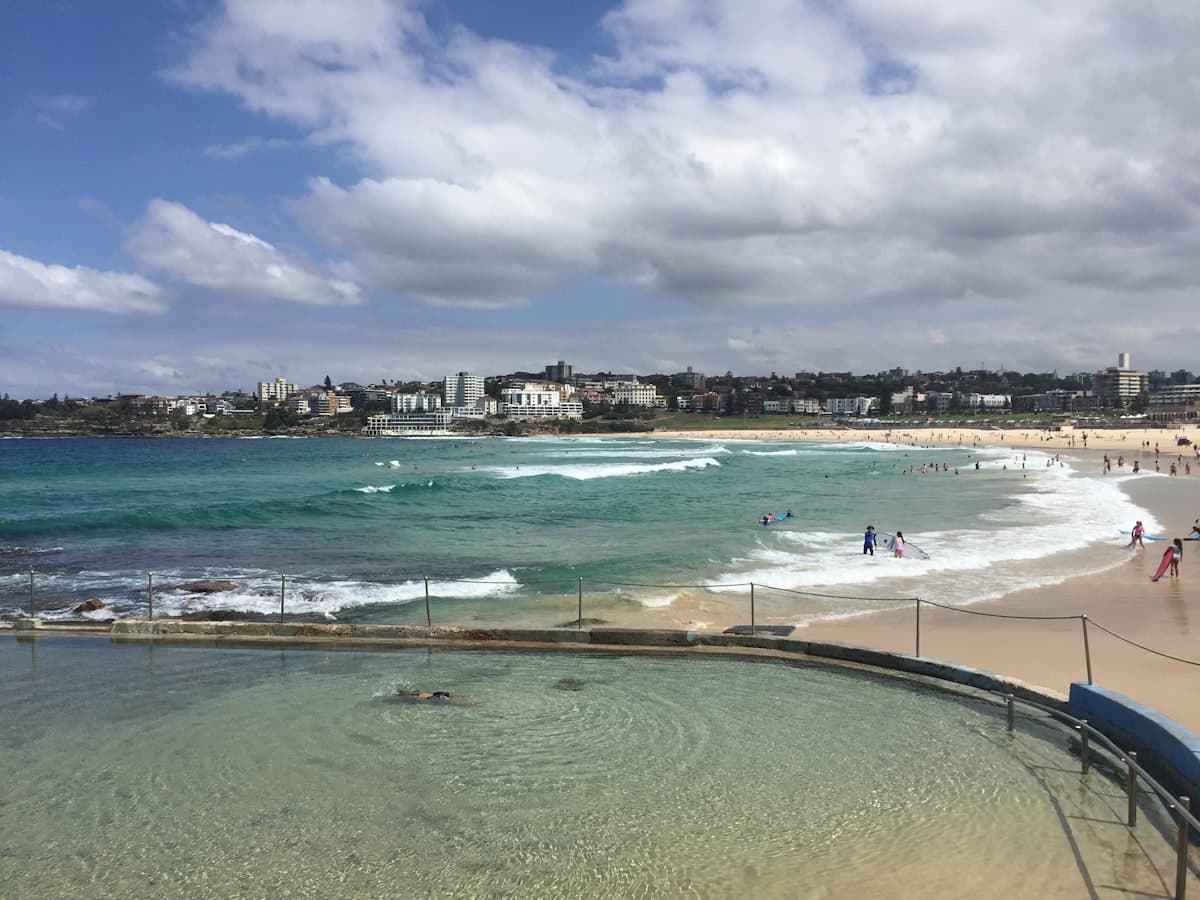
You'll often find Icebergs pool at Bondi alive with activity even in July. That might surprise you if you think of it as a summer fixture, the blue-on-blue backdrop everyone photographs. In winter the light comes in low and yellow off the Pacific, glinting off the energised salt water, the pool becomes a different kind of place: colder, quieter, more honestly itself. The sea is right there beyond the wall, sending waves against it, keeping the pool honest. The wall is rather the point.
NSW built these pools because the coast demanded them. From the turn of last century, as ocean bathing shifted from suspicious to fashionable, the rock platforms along the eastern seaboard were carved and concreted into contained baths, places where the sea could be met at a manageable distance. Most of them are still there. A few are renowned and steeped in heritage. Most are barely sign-posted. All of them fill quietly in the winter months, when the surf beaches lose their patrols and the open water asks more of you than a casual dip warrants. For many, the baths are a way of life, every dip a meditation on the tempered, restorative power of the ocean.
Bondi and Bronte
Bondi is where most people start, because it's where most people start with everything. The Icebergs pool sits at the southern end of the beach, set into the rock platform below the cliff, the swell running in and breaking across its outer wall most days. Entry is a few dollars and in July the queue is short. The water temperature follows the sea: around 16 to 17 degrees through the coldest months, which is cold enough to register properly and warm enough, afterwards, to feel like an achievement. The first thirty seconds are what they are. After that, with the morning light flat across the water and the whole empty arc of beach behind you, the pool earns its name.
Ten minutes south along the clifftop track, Bronte Beach has its own baths tucked into the southern end of the rock platform, smaller than Icebergs and with a wilder relationship to the swell. On a calm morning it is almost peaceful. On a day with any energy in the ocean the water pours over the lip of the walls and the pool churns, and you are very much in contact with the sea, just enough of it at a time. The crowd is generally quieter than Bondi; the walk gives you the approach the swim deserves.
The eastern suburbs accumulate pools from here around to Coogee, one after another, each with its own character and its own devoted regulars. McIver's Baths at the southern end of Coogee is women and children only, the oldest women's sea bath still operating in Australia; Wylie's Baths just around the point dates to 1907 and juts out over the surf on an old wooden deck, the Pacific visible between the boards. None of this is especially hard to find. What surprises people is how quietly these places get on with it: no fuss, no queue, no ceremony. Just the water, the cold, and the morning.
North to Newcastle
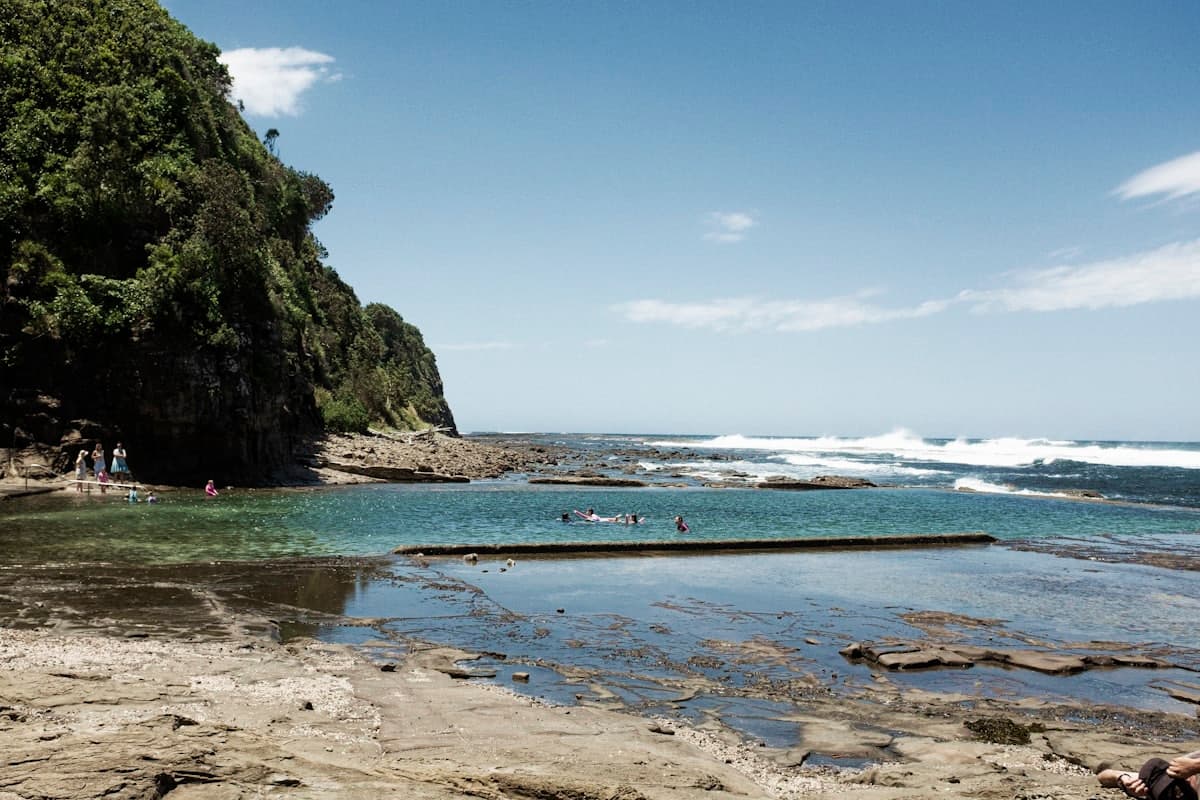
A couple of hours north, Merewether Beach closes out Newcastle's long chain of beaches below a headland, and attached to it are baths on a different scale again. The Merewether Ocean Baths are large, long enough for serious training laps, with the headland cutting the wind and the waves breaking on the outer platform while the pool holds its calm inside. On a winter morning with the sun coming over the cliff edge you can see the bottom clearly at the shallow end and the green goes deep and clear at the far wall.
Newcastle takes its pool seriously. In July you'll find the baths populated by two distinct kinds of swimmer: the leisure swimmer who has come for the cold and the view and has no intention of hurrying, and the serious lap swimmer grinding through distances that suggest an ocean event somewhere on the horizon. They coexist with great contentment, divided loosely by which end of the pool they prefer. The heritage baths have been here since 1935 and look, from the inside, as if they intend to be here another century.
What Merewether has that the Sydney pools mostly lack is length, and with it the sense that you are genuinely swimming rather than floating in a contained box of sea. If the idea is exercise as much as immersion, or if you want a pool that rewards an early start from Sydney with something worth the drive, the baths at Merewether are worth building a day around.
What the pools are actually for
Most of NSW's beaches lose their lifeguard patrols at the end of April. That is not a secret and it is not a problem if you know how to read open water, but it does change the calculation of the winter swim. The ocean pools change it back. The walls take the surf. A rip does not form inside a contained pool. The hazards are different and, for most swimmers, more manageable: cold water, wet rock platforms, the occasional wave breaking over the lip on a swell day. These are things you can account for.
This is what the pools were built for. Not just summer nostalgia or a nice photograph: the infrastructure the coast put in place for year-round swimming on a coastline that is, in winter, genuinely demanding if you go in without thinking. The pools let you meet the sea on a cold July morning without the open-surf judgement call. That is worth something, and the regulars who show up every week in the coldest months already know it.
The water will still be cold. That part does not change. But the light in July does something particular to the sea inside a rock pool, and the thirty seconds of cold resolve themselves into a swim you will think about for the rest of the day. Pick a pool, check that you know how to enter the platform safely, and plan the stop into whatever else brings you down the coast.