11 July 2026 · 4 min read
Seals, penguins and the quieter wildlife of the NSW coast
The whales get the headlines, but the coast keeps quieter company too: fur seals off Seal Rocks and Montague Island, resident dolphins in Port Stephens, wallabies at Jervis Bay, and a fenced-off penguin colony inside Sydney Harbour.
A dorsal fin breaks the surface inside the bay, unhurried, gone again before you can point. Then another, closer in, cutting a slow line past the moored boats. Nobody on the headland reaches for binoculars. In Port Stephens the dolphins are just there, working the same water every morning, and after the first week the locals stop looking up.
Everyone comes to this coast for the whales. Fair enough: they are enormous, seasonal, and they put on a show from the cliffs without asking anything of you. But the quieter animals are the ones that make a place feel lived-in rather than visited, and NSW keeps more of them than the itineraries let on. Some you can rely on. Some you can't, and the honest version of this guide says so plainly.
Port Stephens: the dolphins that never left
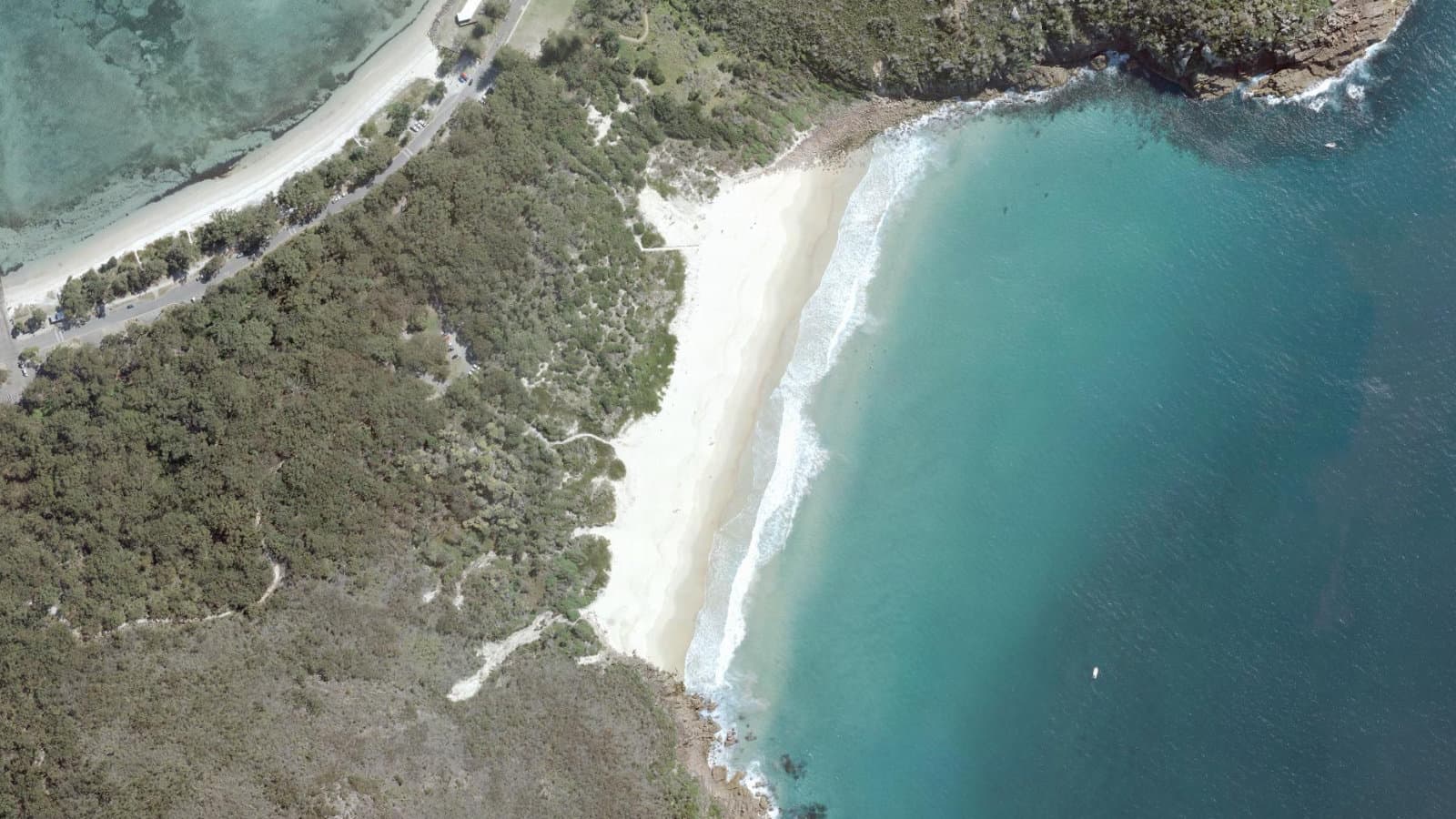
Climb Zenith Beach to the top of Tomaree Head and Port Stephens opens out below you, a long sheltered bay with the open Pacific beyond the heads. Somewhere down there, most days, a resident pod of bottlenose dolphins is doing exactly what it did yesterday: fishing the shallows, riding a bow wave if a boat gives them one, surfacing in loose formation near the sandbanks. Cruises run out of Nelson Bay to find them, but you don't need one. A clear morning and a bit of height from the summit track will usually do it, and unlike the whales further out, these dolphins live here. They are the coast's quiet regulars rather than its migrants.
Seal Rocks, and the animals the place is named for
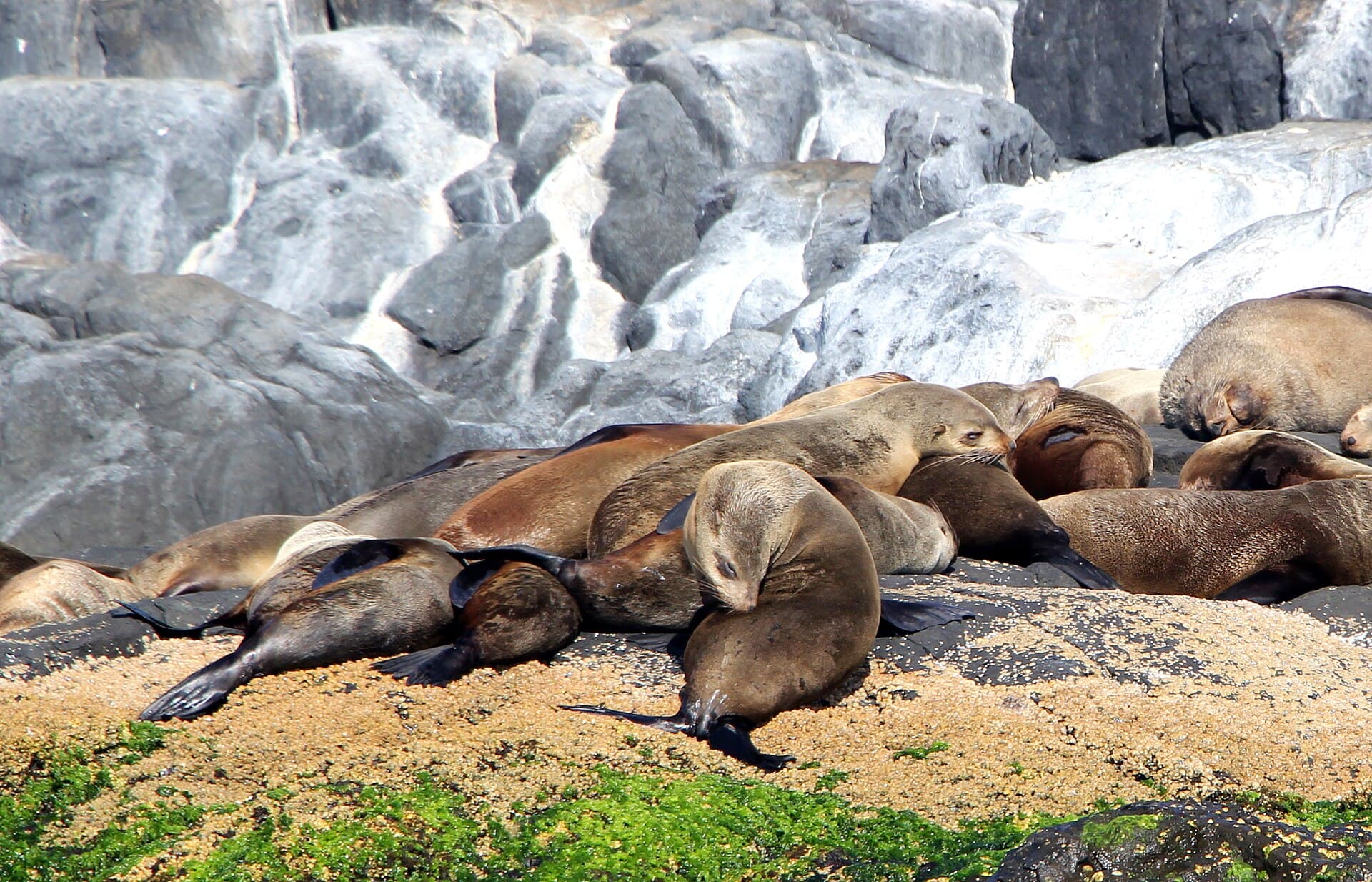
A little way up the coast, the village of Seal Rocks sits below Sugarloaf Point, the lighthouse on the headland one of the better perches on this stretch of coast for almost anything that swims past. The name is not marketing. Australian fur seals haul out on the rocks offshore often enough that the name stuck generations ago, and boat crews working the point still watch for them on the reefs below the light. See them from the water on a good day and it's a genuine thrill; from the sand it's more of a maybe, so treat a sighting as a bonus on top of the walk and the view, not the reason you made the trip.
Montague Island, off Narooma
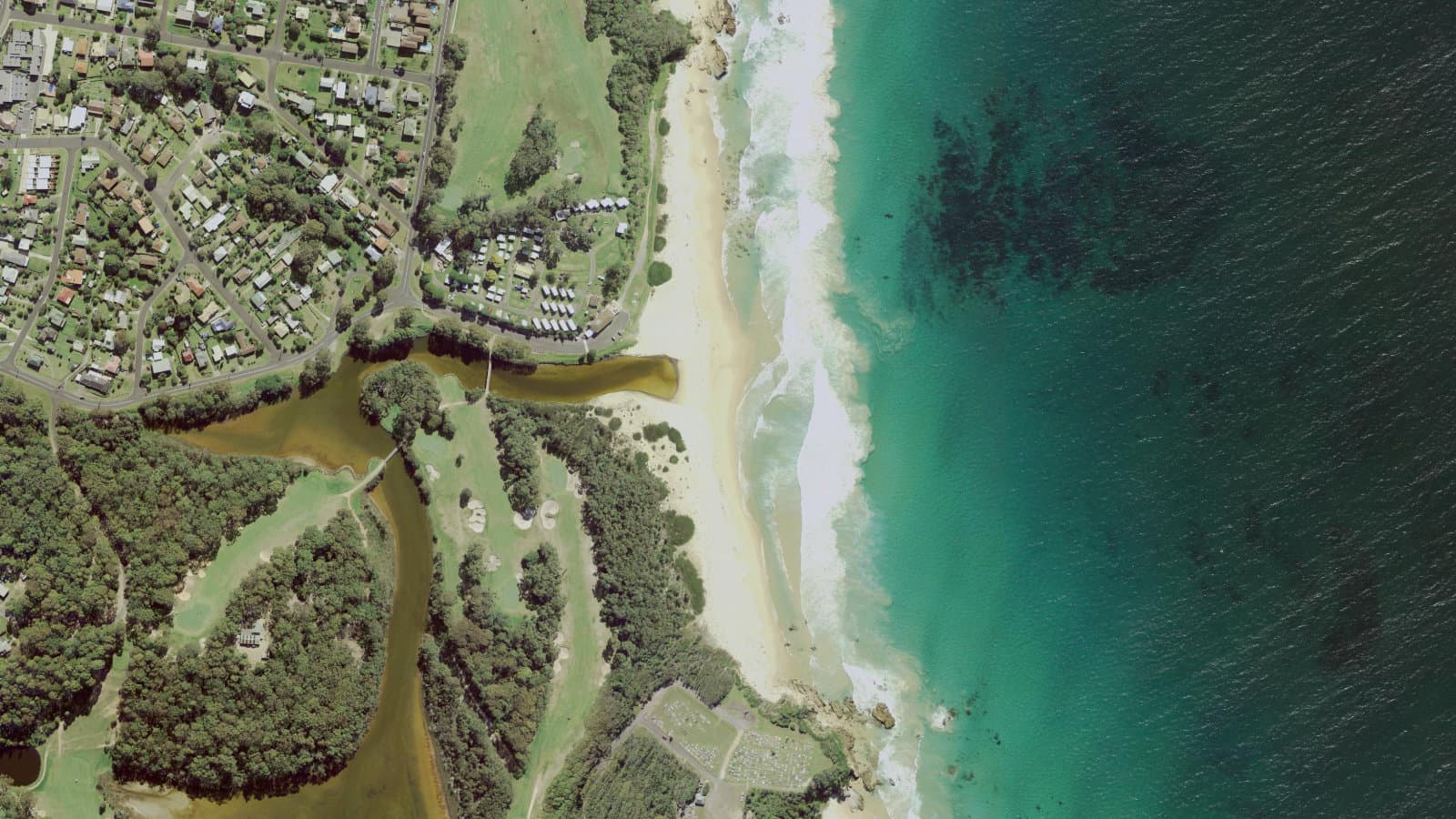
Further south, Narooma Surf Beach looks straight out at Barunguba, known to most as Montague Island, a nature reserve a short boat ride offshore. It carries one of the more reliable wildlife combinations on the coast: a fur seal colony that hauls out on the rocks year-round, and a little penguin colony that comes ashore after dark in the breeding months. The seals you can often spot from a boat without much trouble. The penguins are a different proposition, nocturnal and easily disturbed, and the only responsible way to see them is on a licensed night tour that keeps its distance and its voice down. From the beach itself, expect gannets and the odd seal working the boat channel, and leave the island's colony to the people permitted to go there.
Booderee, where the bush meets the sand
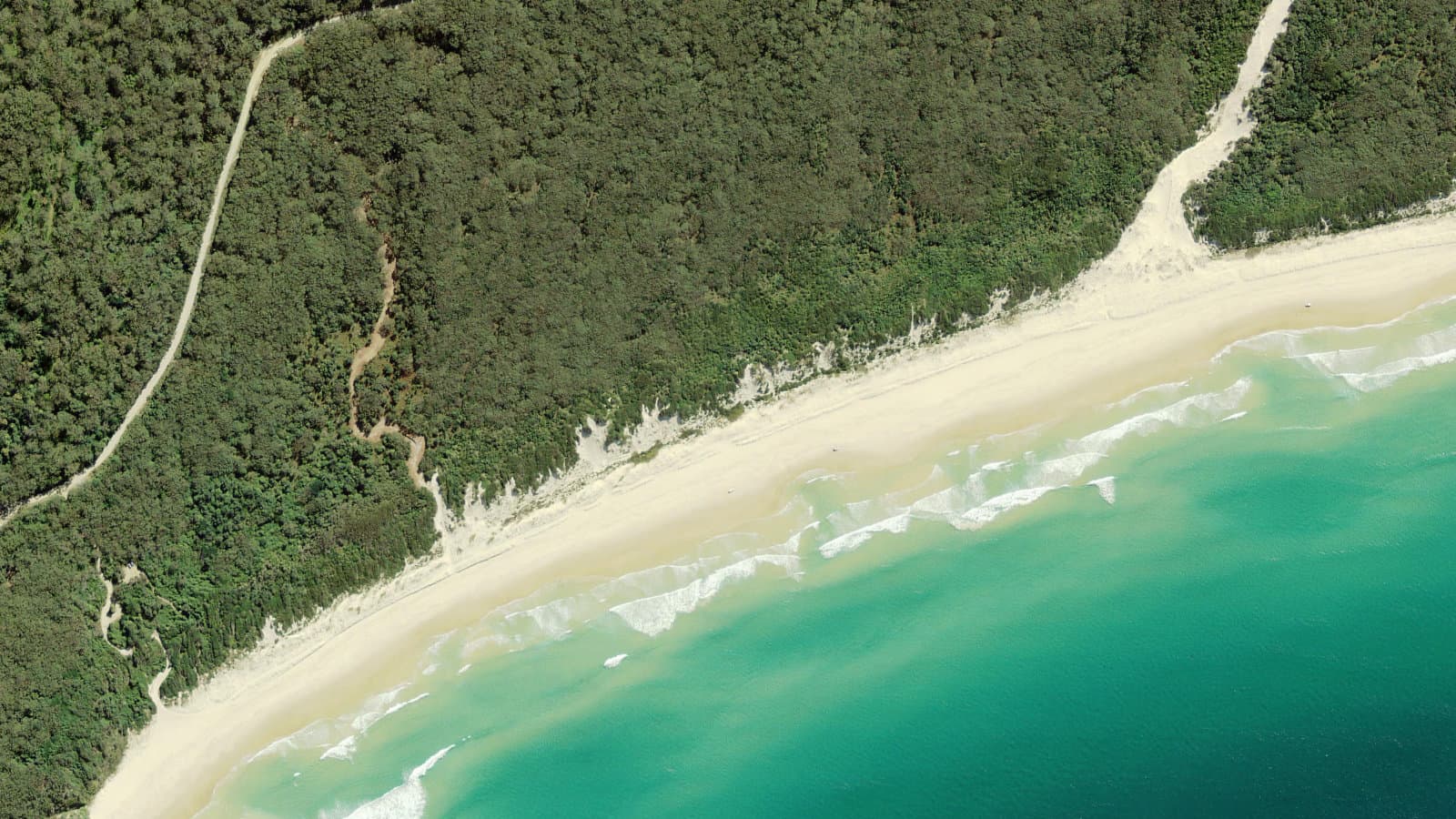
Not every quiet animal lives in the water. Behind Hyams Beach, the road runs into Booderee National Park, land where the wildlife tends to greet you from the car park before you've even found the track. Eastern grey kangaroos graze the verges at dusk, glossy black-cockatoos work the she-oaks for seed with a sound like tearing paper, and a goanna will occasionally hold its ground on the path until you go around it. None of it is staged. It's simply what a healthy stretch of coastal bush looks like left alone, and the beach at the end of the walk is almost the secondary attraction.
The one you're not meant to see
Here's the honest part. Sydney has its own little penguin colony, one of the last on the mainland, tucked into a fold of the harbour where the bush still meets the water. Each breeding season the site is fenced and signed and, quite deliberately, kept hard to reach: the colony is small, protected, and does better the less anyone gets near it. If you go looking for it you'll find the fence and a sign explaining why, and that's about right. Not every animal on this coast is here for us to find. Some of the best conservation stories are the ones where the reward is simply that the animals are still there at all.
None of this runs to a schedule the way the whale migration roughly does. Dolphins are close to a sure thing in Port Stephens; seals are a good chance around Seal Rocks and Montague Island; penguins ask for patience, a licensed guide, and low expectations of a close encounter. Plan a run down the coast that takes in a few of these, keep the boots on for the bush as much as the sand, and let the quieter animals surprise you on their own terms.